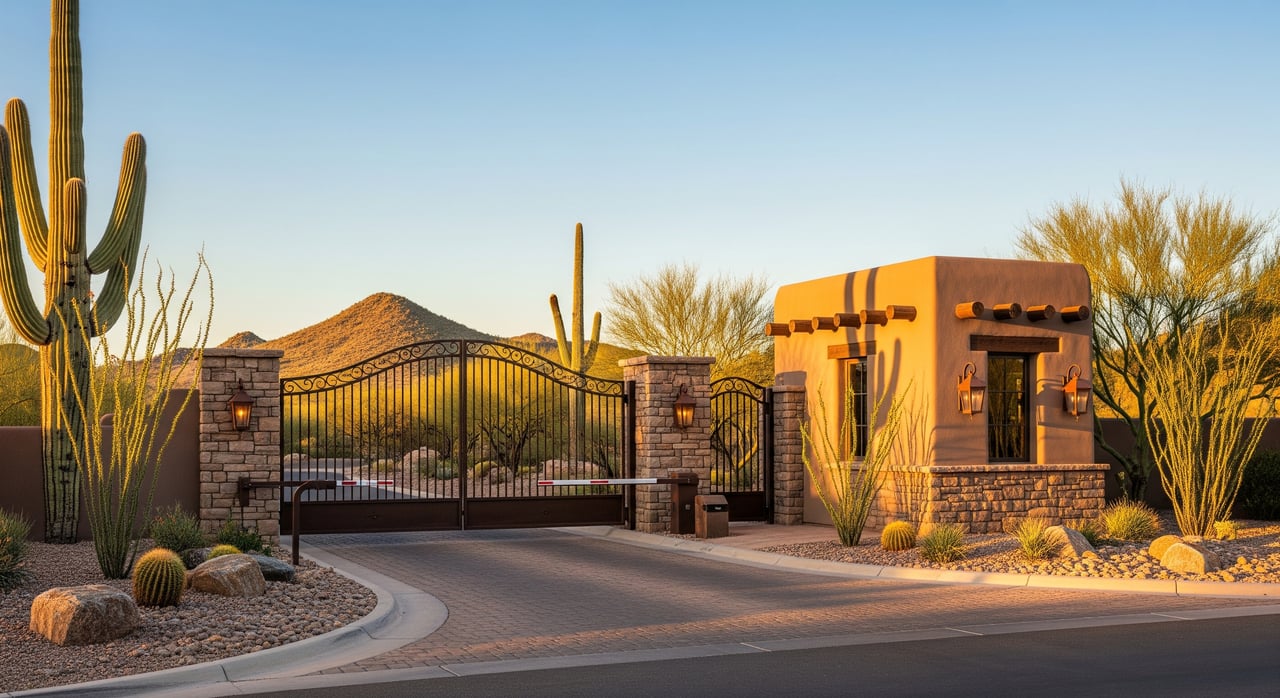
Trying to choose between a gated or guard-gated community in Cave Creek? You want privacy and peace of mind, but you also want the right balance of cost, convenience, and resale value. This guide breaks down how each option works, what it really costs, and what to verify before you buy or sell in Cave Creek. You will leave with checklists you can use today and a clear path to the best fit for your lifestyle and budget. Let’s dive in.
Quick definitions
A gated community uses physical barriers like electronic gates, keypads, or card readers to restrict access. Residents manage entry with remotes, codes, or a guest call system. There is no live security staff.
A guard-gated community is a gated neighborhood that also staffs a human security presence at an entry house. Guards may work full-time or part-time and can verify guests, manage deliveries, log entries, and handle issues when gates fail.
How each model operates
Access control and guests
- Gated: Technology controls access. Guests use a callbox or you provide a code. Compliance by residents is key.
- Guard-gated: A guard can verify IDs, check a guest list, and direct vendors. Human verification adds a layer of control.
Maintenance and uptime
- Gated: Gates need power and regular service. If they fail, residents often wait for repairs or use manual overrides.
- Guard-gated: Guards can manage temporary failures, direct traffic, and use contingency procedures.
Visibility and privacy
- Gated: Lower profile with an electronic system and perimeter fencing.
- Guard-gated: A visible security presence, which some buyers value for peace of mind and neighborhood image.
Common technology
- Gate types: swing, slide, or barrier arm.
- Access tools: remotes, keypad codes, smartphone apps, RFID, or license plate recognition.
- Layers: perimeter fencing, CCTV, lighting, motion sensors, and roving patrols.
Cave Creek context
Cave Creek is known for low-density living, larger desert lots, and a mix of custom homes and subdivisions. Many buyers prioritize privacy, views, and a rural feel, which can make gated living appealing. Both gated and guard-gated options exist in and around Cave Creek, including parts of Carefree and North Phoenix.
Two practical topics often come up locally: emergency access and wildfire evacuation routes. Gates in Arizona are typically designed with emergency access provisions and agreements with fire and emergency services. If you are evaluating a specific neighborhood, verify approvals, gate permits, and emergency protocols with the HOA and appropriate local agencies.
Cost comparison to homeowners
One-time and ongoing costs
- Capital and installation: Gate structures, electronics, and guardhouses are usually developer costs, but communities that add gates later may levy special assessments.
- Operating costs: Electricity, software, repairs, landscaping, and routine service are ongoing in gated communities.
- Guard staffing: In guard-gated neighborhoods, staffing is typically the largest recurring expense. Dues are often higher to cover contract security hours and scope.
Reserves and replacements
All systems have a lifespan. Healthy HOAs maintain reserves or plan for special assessments to replace gate motors, software, cameras, and access devices. Review reserve studies and recent repair history to gauge future costs.
Insurance, legal, and governance
Insurance carriers may consider the presence of gates among many risk factors. Some policies can reflect modest adjustments for reduced opportunistic theft exposure, but pricing is driven mainly by location, loss history, and property characteristics. For guard service, the HOA should require the contractor to carry workers’ compensation, general liability, and auto liability as needed.
Your rights and obligations live in the HOA’s CC&Rs, bylaws, and rules. These documents govern guest policies, gate hours, vendor access, and assessments. In Arizona, planned community laws set disclosure and meeting standards, and buyers should receive HOA documents during escrow. For accuracy, rely on the community’s current documents, budgets, and contracts.
Market and resale in Cave Creek
Buyer preferences vary widely. Some will pay a premium for the perceived privacy, controlled access, and neighborhood image of a gated or guard-gated community. Others prefer lower dues, simpler guest access, and fewer rules. The real impact on price and days on market is specific to each neighborhood.
To quantify value in Cave Creek, use local comps from the most similar gated or guard-gated sales. Consider how dues, reserve strength, staffing hours, and ease of access compare. A well-run community with clear policies often shows better buyer confidence and smoother escrows.
Which option fits your lifestyle
- Frequent traveler or seasonal owner: A guard-gated setup with documented vendor check-in can add confidence while you are away. Confirm delivery and contractor procedures.
- Privacy-focused buyer: Either option can work. Look for strong perimeter controls, lighting, and policies that fit your comfort level.
- Convenience-first owner: A standard gated community with modern access tech can reduce friction for guests and deliveries.
- Investor or second-home buyer: Balance market appeal against higher dues. Evaluate whether guard staffing meaningfully expands the buyer pool for your exit.
Due diligence checklists
Buyers: what to request
- Full HOA documents: CC&Rs, bylaws, rules, and gate or guard policies.
- Most recent budgets, financial statements, and reserve study. Look for line items tied to gates, cameras, and security contracts.
- Security contractor agreement: hours, scope, termination terms, training, background checks, and insurance certificates.
- Board meeting minutes for the last 12 to 24 months to spot discussions about assessments, incidents, or major repairs.
- Incident or security logs if available, and local police reports for the area.
- Special assessment history and any pending litigation.
- Copies of permits and emergency access agreements for gates and guardhouses.
- Operational questions: How are utilities, mail, packages, and trash pickup handled? Are there vendor hours or secondary gates?
- Field test: Visit on weekdays and weekends, day and night, to see traffic flow and guest handling.
- Neighbor feedback: Ask about delivery challenges, wait times at gates, and guard service performance.
Sellers: what to prepare
- Complete HOA package and proof of current dues; disclose any pending special assessments for gate or guard costs.
- Recent gate maintenance and repair records; show reserve funding plans for replacements.
- Security contractor agreement and staffing schedule if guard-gated.
- Showing instructions that explain access for visiting agents and buyers.
- Marketing notes that highlight gate or guard features while being clear about operating costs and policies.
Common concerns, clear answers
- Do gates or guards guarantee safety? No. They can reduce casual trespassing and opportunistic property crime, but they are not absolute deterrents. Review local incident data for context.
- Will emergency services be delayed? Properly designed systems include emergency access methods. Still, malfunctions or human error can cause delays, so verify written protocols.
- Can dues increase to keep guard service? Yes. HOAs can raise assessments subject to governing documents and state law. Review budgets and reserve policy to understand risk.
- How do deliveries and vendors enter? Policies vary. Some require check-in at a guardhouse, some use temporary codes or vendor lists, and some route deliveries to secondary gates.
- Can owners get permanent guest codes or remotes? It depends on the HOA. Access devices and codes are typically controlled and may carry fees or use restrictions.
How a local expert helps
Choosing the right Cave Creek community is about more than a gate. You want a clear read on HOA strength, real operating costs, emergency access design, and true market impact. With a builder’s eye on systems and a data-driven approach to comps, you can move forward with confidence.
If you are weighing gated vs guard-gated living or preparing to sell in a controlled-access neighborhood, let’s talk through the details that matter and tailor a plan to your goals. To get started, connect with Brian Snodgrass for a focused strategy on your next move.
FAQs
What is the core difference between gated and guard-gated communities?
- Gated communities rely on electronic access controls, while guard-gated communities add on-site staff who verify guests and manage entry.
How do HOA dues differ in Cave Creek gated vs guard-gated neighborhoods?
- Guard-gated communities typically have higher dues because guard staffing is a major recurring expense; review each HOA’s budget to confirm specifics.
Do gates slow emergency response times in Cave Creek?
- Properly designed gates include emergency access methods and agreements, but malfunctions or human error can create delays; verify written protocols with the HOA.
How do deliveries and contractors access a guard-gated Cave Creek home?
- Policies vary by HOA, from guard check-in and vendor lists to temporary codes or secondary gates; ask for written procedures before closing.
Does a guard-gated address increase resale value in Cave Creek?
- It can for buyers who value controlled access and image, but the effect is neighborhood-specific; rely on recent comparable sales to quantify.
What should I review before buying in a gated or guard-gated HOA?
- Request CC&Rs, rules, budgets, reserve studies, security contracts, meeting minutes, incident logs, and gate permits, then visit at different times to test operations.